Rencontre with David Suire
For more than twenty years, you have listened to the subtle inflections of the vineyard in Saint-Émilion with rare attention. You arrived in 2002, at just 22 years old, and grew alongside Nicolas Thienpont before becoming, in 2024, the discreet face of Château Larcis Ducasse, a Premier Grand Cru Classé. At the same time, you manage Château Laroque, a 61-hectare vineyard on the limestone plateau of Saint-Émilion, where the stone seems to breathe alongside the vines.
Born in Charente-Maritime, into a family of winegrowers and distillers, you have retained from your origins a sincere relationship with the land, this land whose scent you love after the rain. Behind your discretion lies a certain rigor: that of a patient quest for detail and a meticulous search for what defines the singularity of a place.
Meeting you is like hearing a murmur rather than a long speech. You prefer precision to noise, mountains to turmoil. You move forward with balance and passion, like a passer of time, faithful to the soul of the terroirs you give voice to.
Let’s begin with the wine you chose to share during this lunch. Why this one?
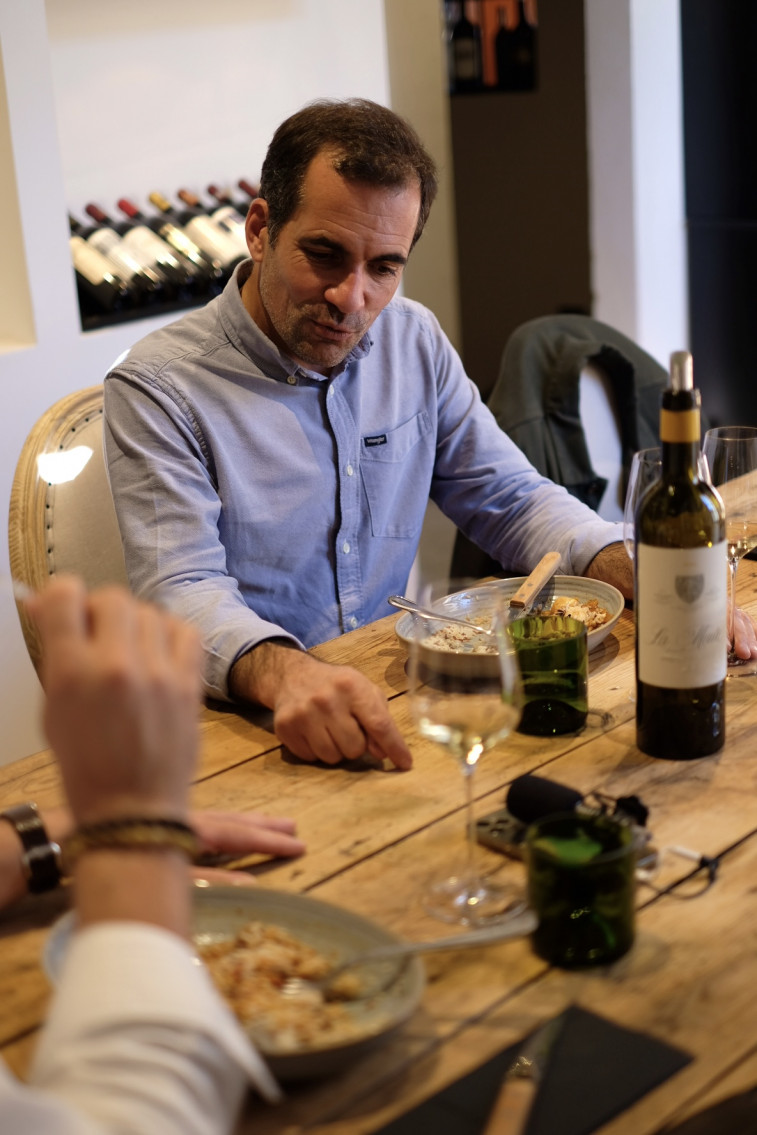
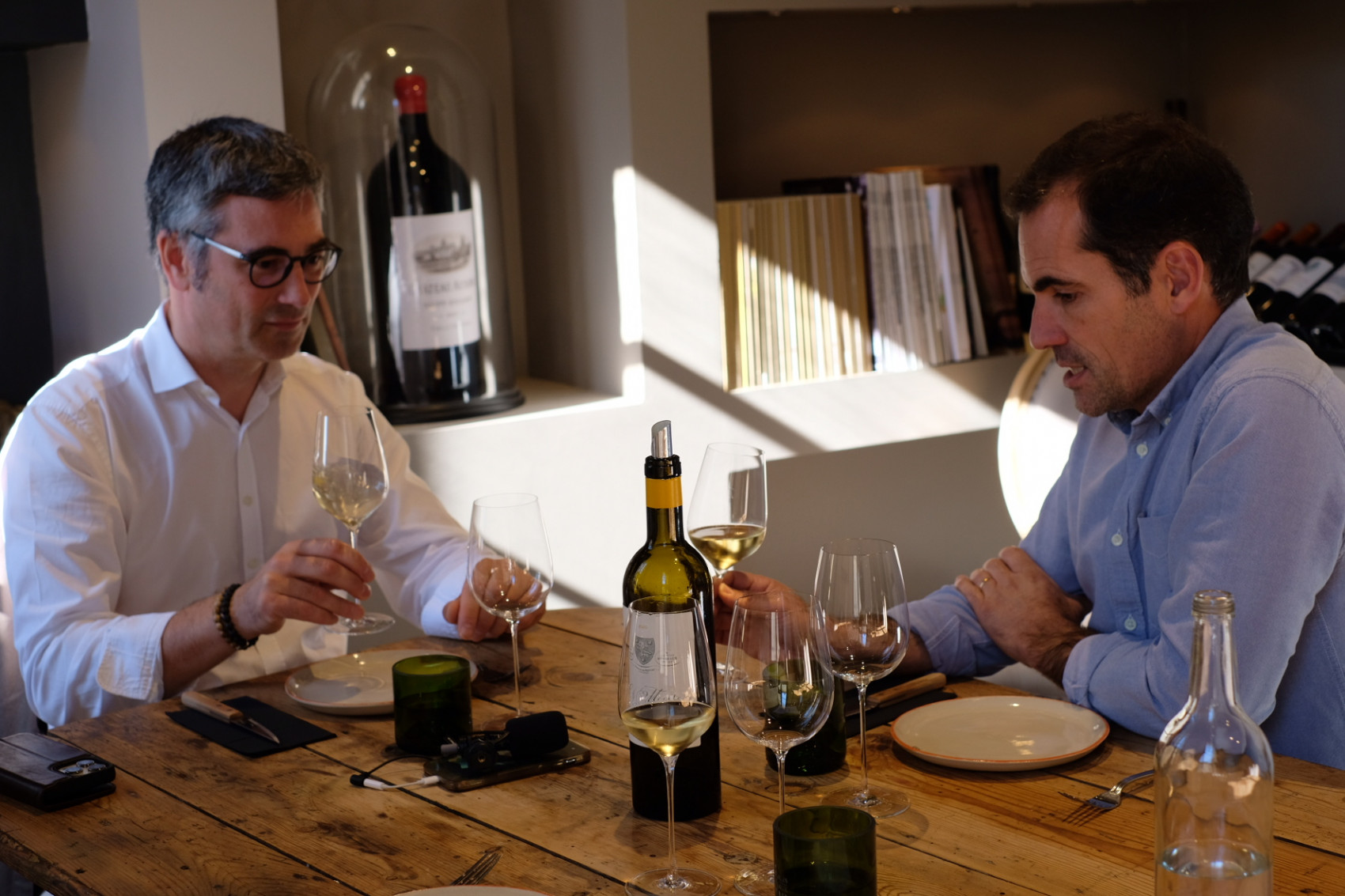
I chose La Meute 2020, a white wine from the Despagne family, for several reasons. First, because they are a family of winegrowers I deeply respect for the work they have carried out over time. We are here in the Entre-deux-Mers, a beautiful region that deserves to be better known and recognized.
I could have brought a bottle from another region of France, or even from further afield. But I deliberately chose to stay in Bordeaux. Basaline and Thibault, brother and sister, produce both reds and whites. This one is a pure Sémillon, from very old selections planted at high density, on a specific plot: La Meute. It sits on a limestone rise, on the slopes above the Dordogne. It is a wine deeply rooted in its place.
It is also a family with a long winemaking tradition and a true love for the table. They know how to craft gastronomic wines.
You also chose a book, Wintering by Peter Geye. Why this one?
Wintering by Peter Geye is inspiring for the places it evokes. These vast American landscapes, these expanses of rivers and lakes, close to the Canadian border, where you are almost certain not to encounter anyone.
It is a novel of inner adventure, telling the story of an elderly man, weakened, who sets out into these immensities. These spaces invite reflection, silence, and a form of stripping away. They echo my own relationship with nature.
With more than twenty years of expertise on the terroirs of the Right Bank, how would you describe your relationship with nature and the vineyards of Saint-Émilion?
It is an immense fresco of human adventures. A land shaped by generations of winegrowers and craftsmen. That is what defines terroir, far beyond its geological characteristics alone.
As in other great wine regions, here the land is inhabited, cultivated, and passed on. There is an accumulation of know-how, layer upon layer. When you walk through the vineyard, the landscape tells this story at every moment.
And then there is the know-how of the winegrower, which exists elsewhere too, but which here has allowed the emergence of wines of great finesse. Merlot and Cabernet Franc, the ambassadors of Saint-Émilion, have been refined on these terroirs. They are an integral part of the region’s identity.
It is much more than a simple winegrowing adventure. It is not only about planting vines, cultivating them, and bottling wine. Working these historic vineyards means accepting to be a link in a chain filled with history.
What does this role imply for you in your current position?
Ensuring that the story continues. That nothing stops. We must collectively create the conditions that allow us, in turn, to pass things on.
We also have a responsibility to shed light: to talk about what others have done before us. Today, our role is no longer limited to making wine. It is also about inscribing wine into a long narrative.
In fact, I considered bringing an old vintage today. A wine that our generation did not make, but which brings immense emotion and allows us to speak about the past differently.
The great strength of our region lies in these old vintages that can still be found, more than elsewhere. Wines age remarkably well, and still allow these encounters with time.
As winegrowers, we have a real role in education. It is good to drink young wines – vibrant, fruity, enticing – but more and more, I find pleasure in wines that carry the patina of time. Perhaps also because I am getting older (smiles). Young wines cannot speak in the way that older wines can.
Wine is one of the rare products capable of expressing so intensely this notion of passing time. And that is magnificent. Other regions express it differently through oxidative styles, flor ageing, fortified wines, and so on. I deeply admire these cultures. They say something different, and that is what makes wine so fascinating.
When you talk about passing on, do you include values? If so, which?
I don’t know if a winegrower has “values” to transmit in the usual sense. But passing on this profession necessarily involves transmitting rural values: respect, solidarity between generations, the awareness that we are nothing without those who came before us, nor without those who will follow.
The question of humility – of humus – is central in agriculture.
I don’t feel invested with a grand mission, but in the way I practice this profession, yes, one embodies something. I am deeply attached to the notion of taste, to aesthetics. That is why I came to wine. But if this quality is not accompanied by a more universal message, then something is missing.
How did you come from the Charente to the heart of the vineyards of Saint-Émilion?
By chance, through encounters. Notably with Nicolas Thienpont.
I come from a family of distillers. Very early on, I wanted to pursue this family path, without necessarily continuing it at home. I became interested in viticulture, then in oenology. Bordeaux was the natural place to study.
After some travels, in 2000, Stéphane Derenoncourt created his structure, Nicolas Thienpont was already working at Pavie Macquin, starting at Bellevue, acquiring La Prade. Larcis Ducasse came in 2002. He settled there and invited me to join him.
I started as an intern, at a time when the team was small. We did everything. I then left for California, and upon my return, Nicolas asked me to take care of Larcis Ducasse. I was 22.
When I saw the vines, the slope, the team… I did not hesitate for long. And it never stopped.
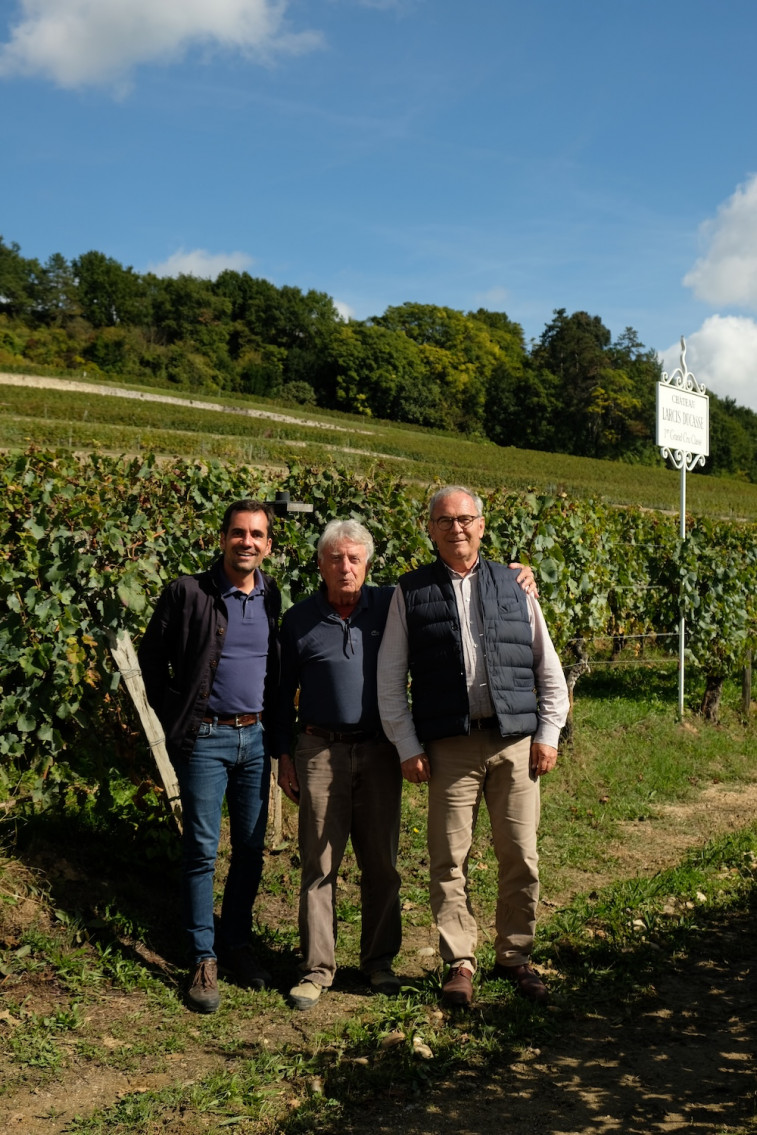
You worked for more than twenty years alongside Nicolas Thienpont before the Gratiot family and he entrusted you with the management of Larcis Ducasse. What are the key lessons you learned from this?
I obviously owe a great deal to Nicolas. This transmission is rooted in the long term, on the scale of a generation. Twenty-four vintages shared. That is considerable.
When you take over from someone like Nicolas, you must never try to replace them. Otherwise, you never truly step into the role. The trust placed in me by the Gratiot family is also one of the keys to our success.
Among all the lessons, if I had to keep only one, it would be humility. Returning to the land, whether things are going well or the period is more difficult. It guarantees continuity, resilience. You know, and you feel, that when you return to the land, you are in the right place.
Larcis Ducasse is a singular wine. What makes this estate on the southern slope of Saint-Émilion so distinctive?
Larcis is a concentration of this southern slope, which has greatly contributed to the recognition of Saint-Émilion wines. It is a slope facing south and the Dordogne valley, a slope of light, from morning to evening.
This exposure offers a very particular generosity and aromatic complexity. But it is the geological structure that makes this hillside exceptional. The vine is a perennial crop, and in the context of climate change, deep root systems are becoming essential.
Here, we have a true geological millefeuille: white clays and limestone belonging to the broader Fronsadais molasse family, with over fifty meters of deposits. This makes it one of the coolest soils in the appellation.
Marls are soft, elastic rocks that allow roots to go deep. Geologically, we exceed 60% limestone, we can speak of rock. The soils are white, with little organic matter due to erosion, which limits heat accumulation. The vegetative cycle is long on these white soils, with early budbreak but slower vine development than elsewhere: a real asset in today’s climate.
The final fundamental element is the presence of springs. Beneath the limestone, a layer of impermeable blue clay gives rise to these springs found all along the southern slope: Fonplégade, Bellefont-Belcier, Ausone, Pavie… The well in the center of the courtyard at Larcis Ducasse is a very tangible example.
All the projects carried out at Larcis aim to express the singularity of this hillside; this slope of “light and freshness” which, vintage after vintage, leaves its imprint on the estate’s wines. There are aromatic expressions here that cannot be found elsewhere.
The nose is often generous, the attack fleshy, then the palate returns to this very calcareous white clay that structures the wine through to the finish. This tension carries the whole.
How would you define the aromatic profile of Larcis Ducasse?
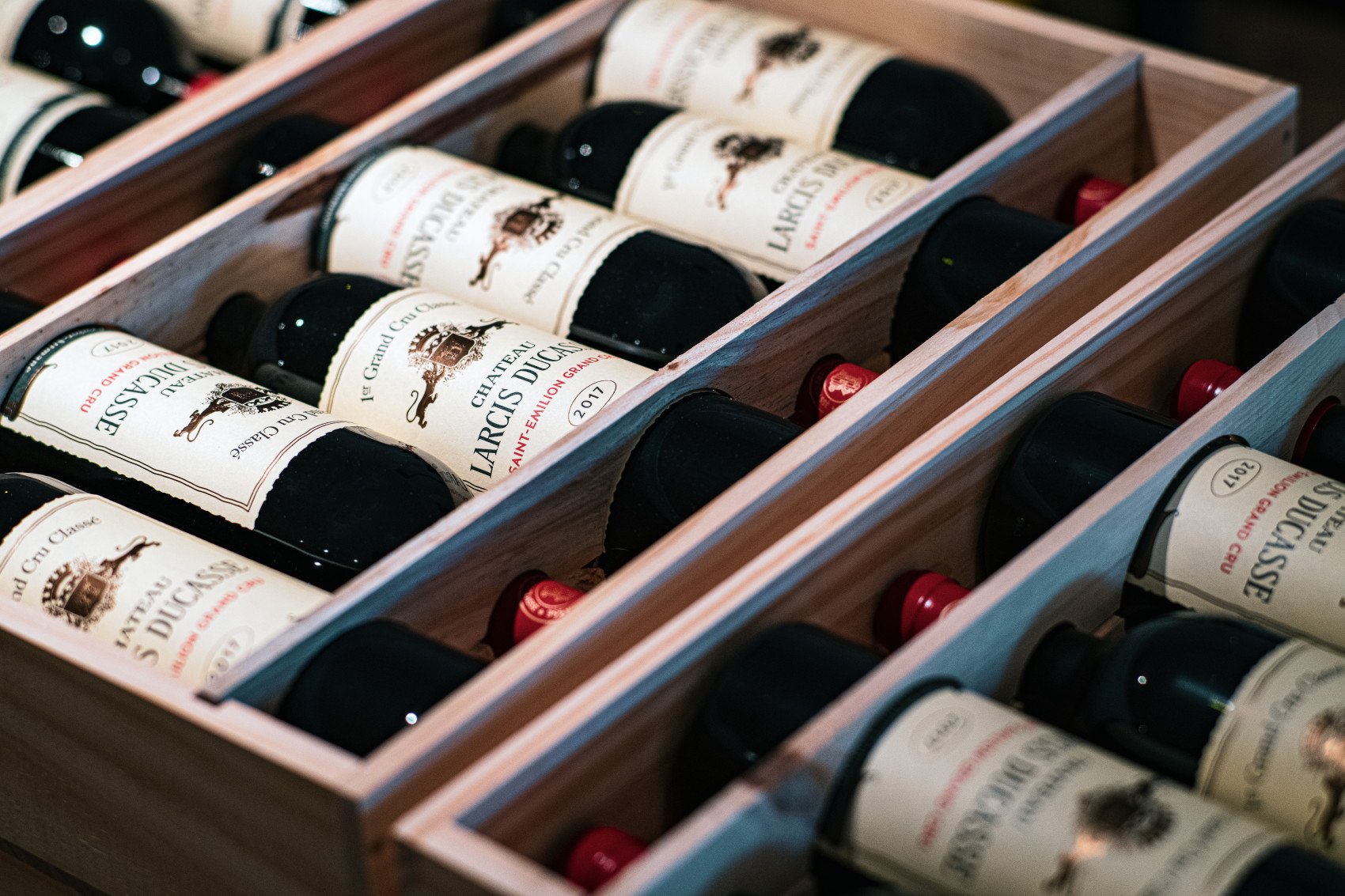
Over time and through our work, we have identified four dominant lieux-dits, each expressing a distinct profile. Although they are blended in the estate’s wines, one place, one character tends to prevail depending on the vintage conditions.
We have therefore classified vintages into four main families:
“Rooted” Larcis: 1966, 1983, 2004, 2012, 2017
“Solar” Larcis (juicy, sun-filled fruit, spicy notes): 1945, 1959, 1990, 2005, 2009, 2015
“Luminous” Larcis: 1967, 1971, 1989, 2010, 2016
“Saline” Larcis: 1961, 1962, 1988, 2008, 2014
The plateau represents around 15% of the vineyard and brings a very marked saline signature.
On the slope, there are roughly three layers, like a millefeuille of white clays more or less calcareous, more or less clay-rich, combined with concave areas of varying humidity. This hillside vineyard is a true patchwork. Deeper or cooler areas lead to more “rooted” profiles, while drier, stonier sectors tend toward light and solar expressions.
The top of the slope brings a white light, with notes of white fruits, citrus, and white flowers.
When you say you always return to the land, how does that guide your work? How important is intuition?
Scientific analysis is a snapshot. It provides information, but it does not interpret. In the end, it tells us very little about the grape or the wine.
Experience, winegrowing culture, and the succession of vintages allow us to better understand what comes from the place, from the climate. Without this repetition of experiences over 5, 10, 15, or 20 years, it is impossible to answer.
Taste and the land always guide us. It is up to us to make the connection.
With tasting experience, we can make mistakes, of course, but over time, our perception sharpens and we become increasingly able to distinguish what comes from the soil and what comes from the year. And we must always keep in mind that when maturity is complete, the terroir, its expression in the wine, always prevails.
Are there vintages that have particularly marked you?
Above all, the older vintages. Young wines do not yet have that patina of time; they do not tell the full story.
Some vintages are moving because they carry the upheavals of the climate. When you compare the vineyard records of the time with events like frost, heatwaves, storms… and the wine now in the glass, everything reappears.
1959, 1964, 1967, 1945… These wines have so much to say. Fifty years later, and sometimes more, everything is still there.
In your view, what defines a great wine?
It is when, at full maturity, the terroir takes over. The debate about harvest dates is eternal, but one thing is certain: as long as the fruit has not reached full maturity, it has not captured the full message of the place. And vice versa.
It is not only a matter of acid balance or tannins. Our responsibility is to give the vine and the fruit the time to express themselves even when all reason would suggest harvesting earlier.
What do you see as the major challenges ahead?
Ensuring that viticulture remains a refuge of humanity, oriented toward passing on know-how.
This involves training. Among other initiatives, we launched Les rendez-vous des apprenants, now in its second edition. With around twenty Right Bank estates, we share our practices with young people who are training, interning, or apprenticing with us. This year, there were 48 participants. The enthusiasm is real.
Stream of consciousness
A book: Wintering by Peter Geye.
A piece of music: the brand-new recording by Raphaël Pichon and his ensemble Pygmalion, A German Requiem by Johannes Brahms.
A scent: a fleeting one, the smell of earth after the rain (petrichor).
A place to recharge: the mountains, of course.
An activity to recharge: hiking, and if possible, bivouacking in the mountains. In any season.
Your latest tasting favorite: an amontillado over 20 years old.
Photos, propos recueillis et mis en mots par Marie-Pierre Dardouillet