Rencontre with Joséphine Duffau-Lagarrosse
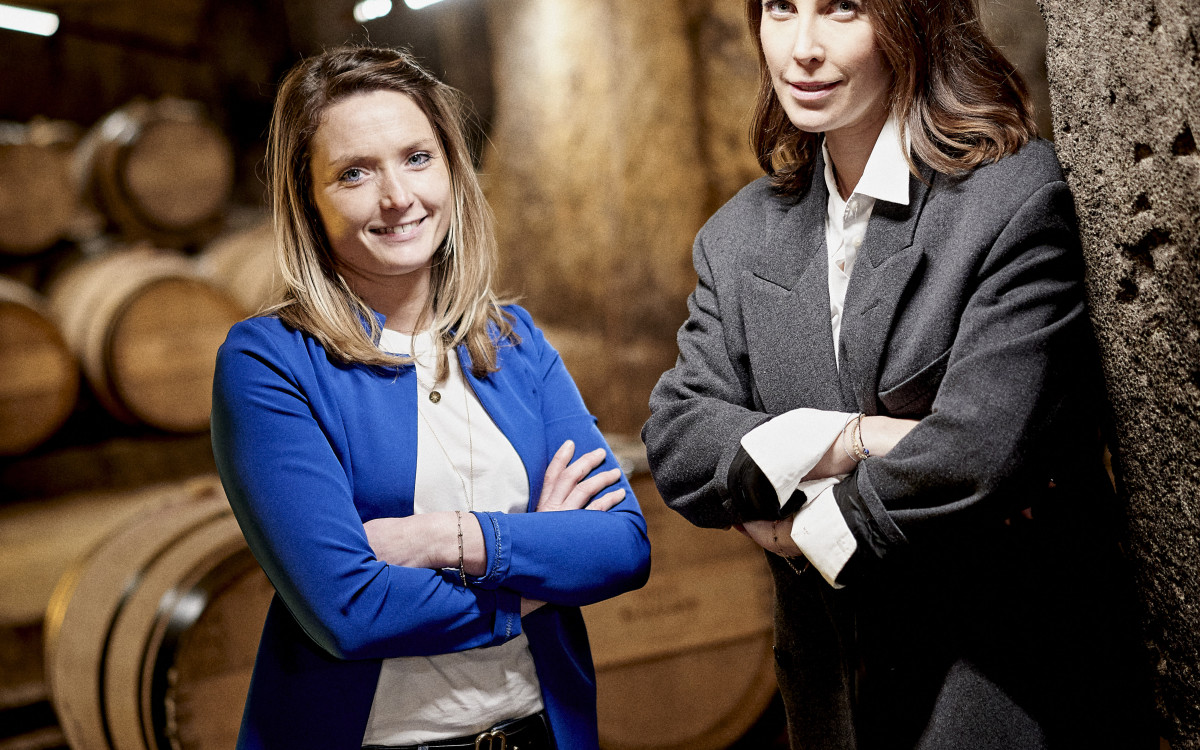
At Beauséjour, each vintage tells a dual story: that of a great Saint-Émilion terroir, and of the people who embody it. Today, it is you, Joséphine, the ninth generation, who carry this responsibility alongside Prisca Courtin, bringing renewed energy to this Premier Grand Cru Classé of Saint-Émilion.
You chose to take on this heritage with both clarity and enthusiasm, balancing deep respect for your family legacy with a forward-looking vision. Your approach combines rigor, freshness and sincerity; qualities that resonate not only in your decision making, but also in the wines you make.
Meeting you means discovering a committed young woman, attentive to detail and driven by a clear intention: to guide a cru that evolves with its time while never losing its soul.
If you had to describe Beauséjour in one sentence, what would it be?
Quiet strength.
Why?
I am constantly amazed and inspired by the terroir. There is something very special happening at Beauséjour. The vineyard’s location, the soils, the overall terroir, year after year, they bring both remarkable consistency and singularity.
Even in challenging conditions, such as drought, we are never truly impacted. When you taste the grapes in the vineyard, and then when they arrive at the winery, there is this almost magical moment when everything reveals itself.
What strikes me most is this shift that happens in the cellar. Whether it’s 2021, 2022 or 2024, very different vintages, you always find the same power of terroir, its ability to fully express itself in the wines. There is something deeply striking about it.
I often say this, especially when preparing a new season: every time we taste the vats, there’s this moment when I think, “This is incredible.” What we tasted in the vineyard was already very good, but here, you truly understand that you are facing a great terroir.
In this element of magic, could you explain the genesis of the new cellar, which is quite breathtaking?
When I took over the estate, my first vintage was 2021. The existing cellar was already very good, I do not question that. But I quickly realized that we could go further.
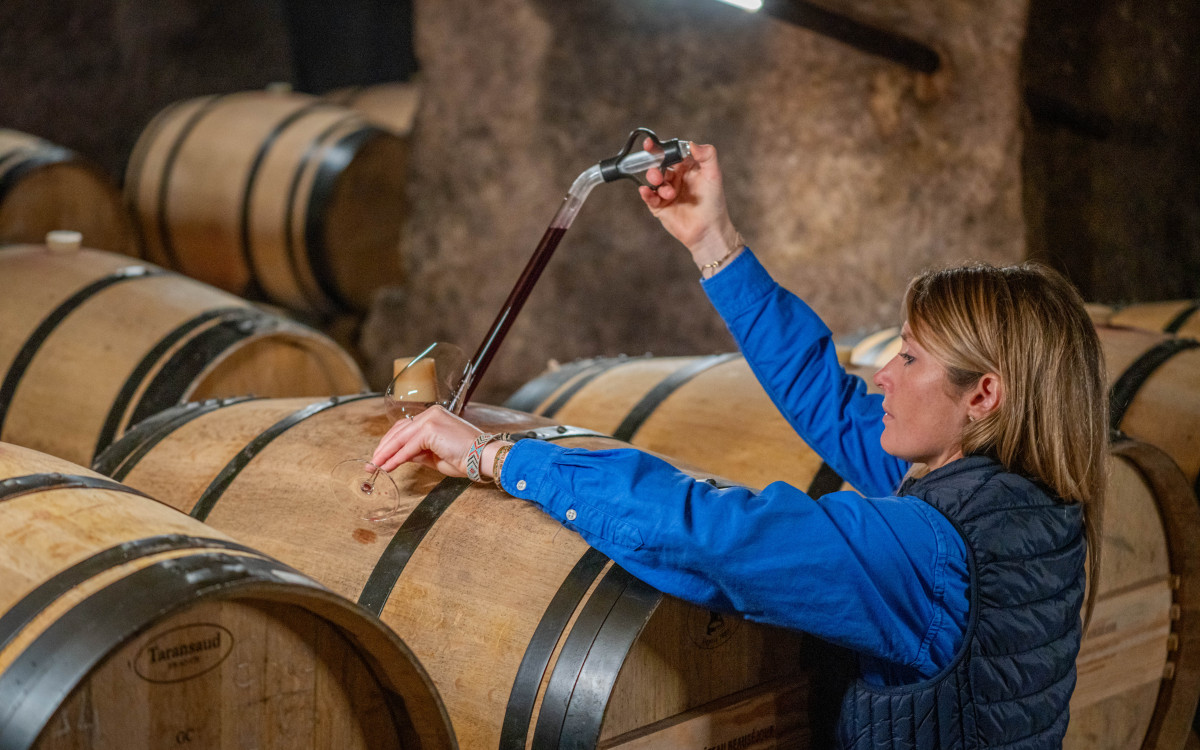
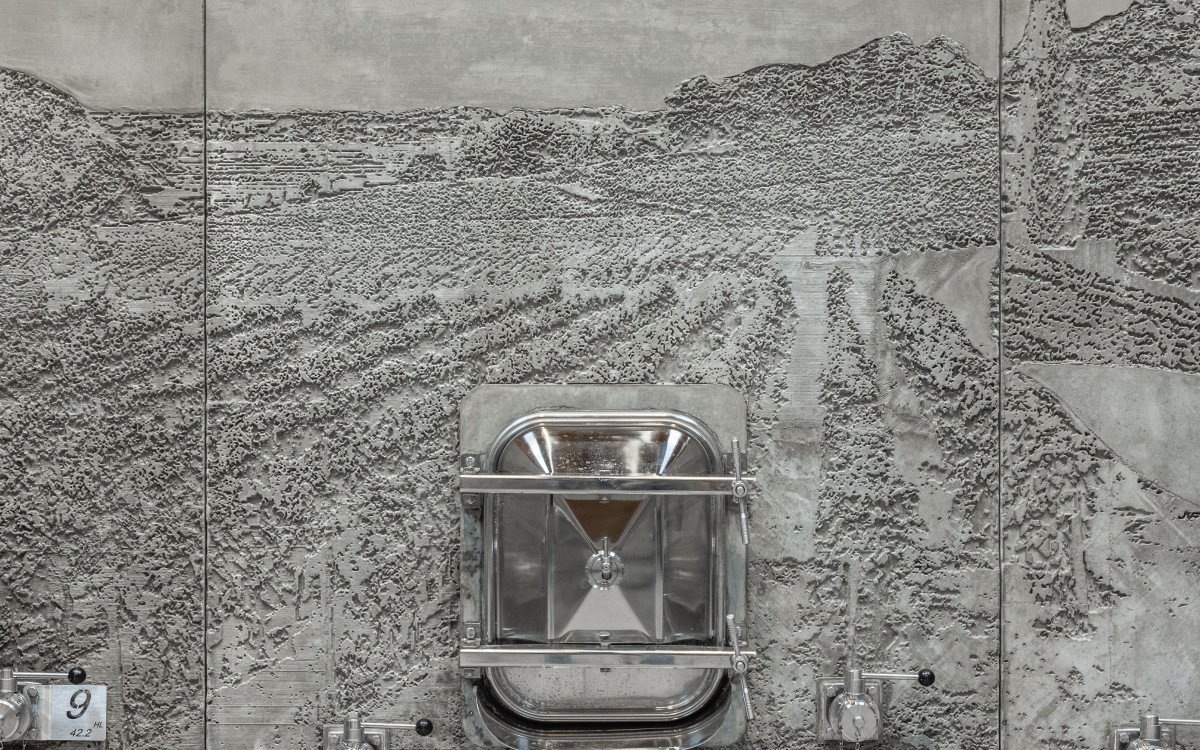
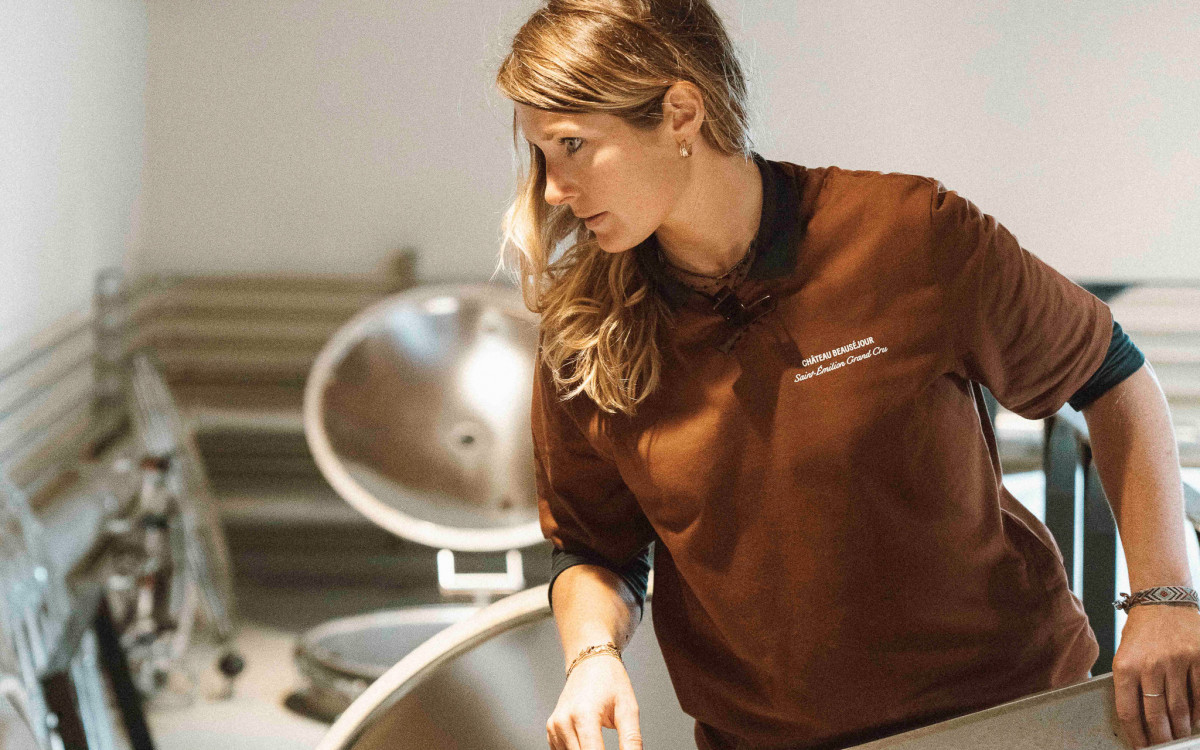
There were plots I wanted to vinify separately, and we didn’t have enough small tanks to do so. It was also the first time I vinified so extensively in concrete. And I discovered something I had never truly experienced before: the silence of concrete, its neutrality.
Unlike wood or stainless steel, concrete imposes nothing. It accompanies. There is also its thermal stability: once the temperature is set, it remains remarkably constant, with very little fluctuation. It is ideal for precise vinification.
With Prisca, we wanted above all a cellar that reflected Beauséjour: authentic, beautiful, and above all not ostentatious. Finding the right balance is delicate, the line is very fine.
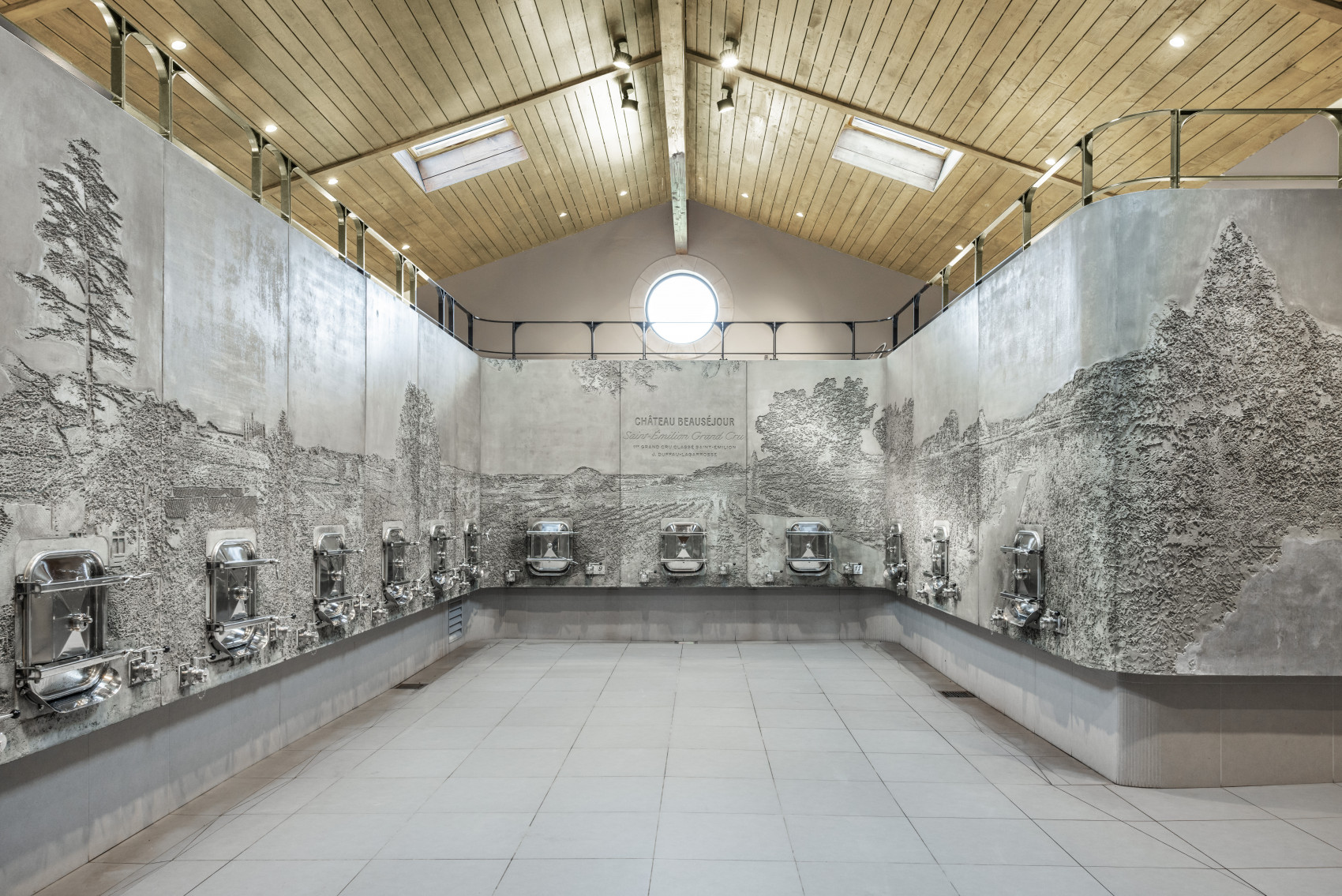
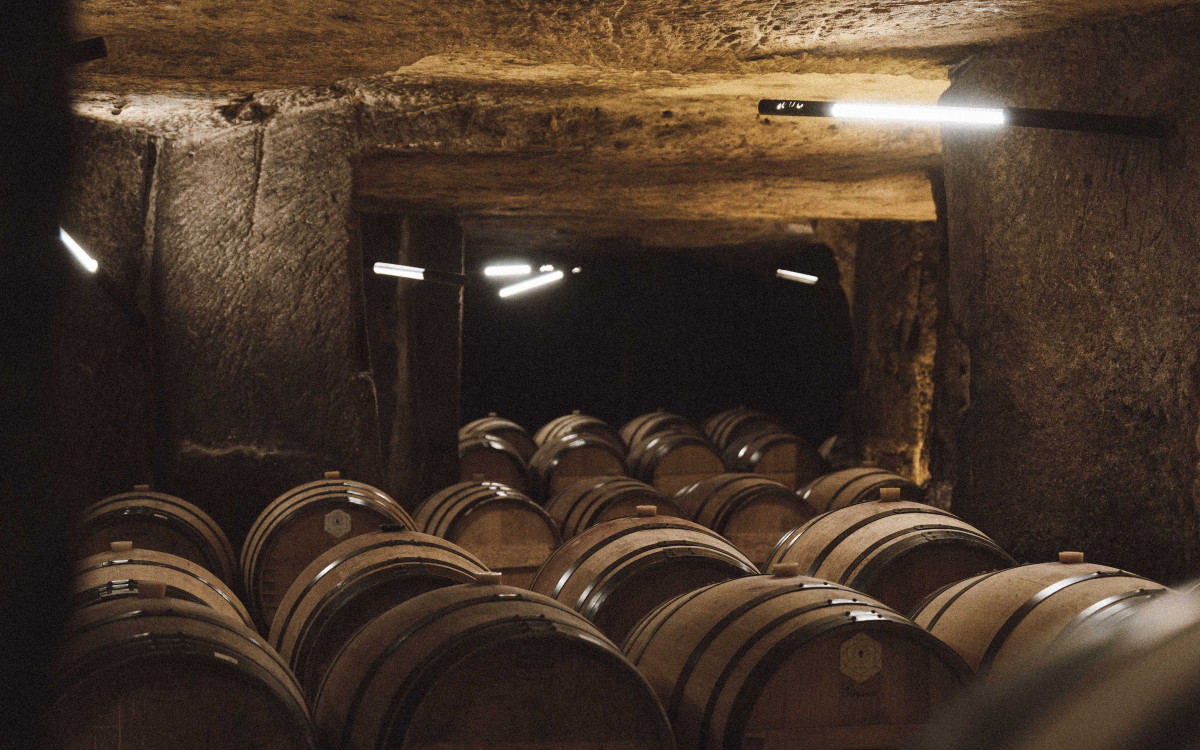
The magic of Beauséjour lies, of course, in the underground quarries. As soon as you descend, you are cut off from the world, from time, from space. But we quickly understood that it was impossible to reproduce them artificially.
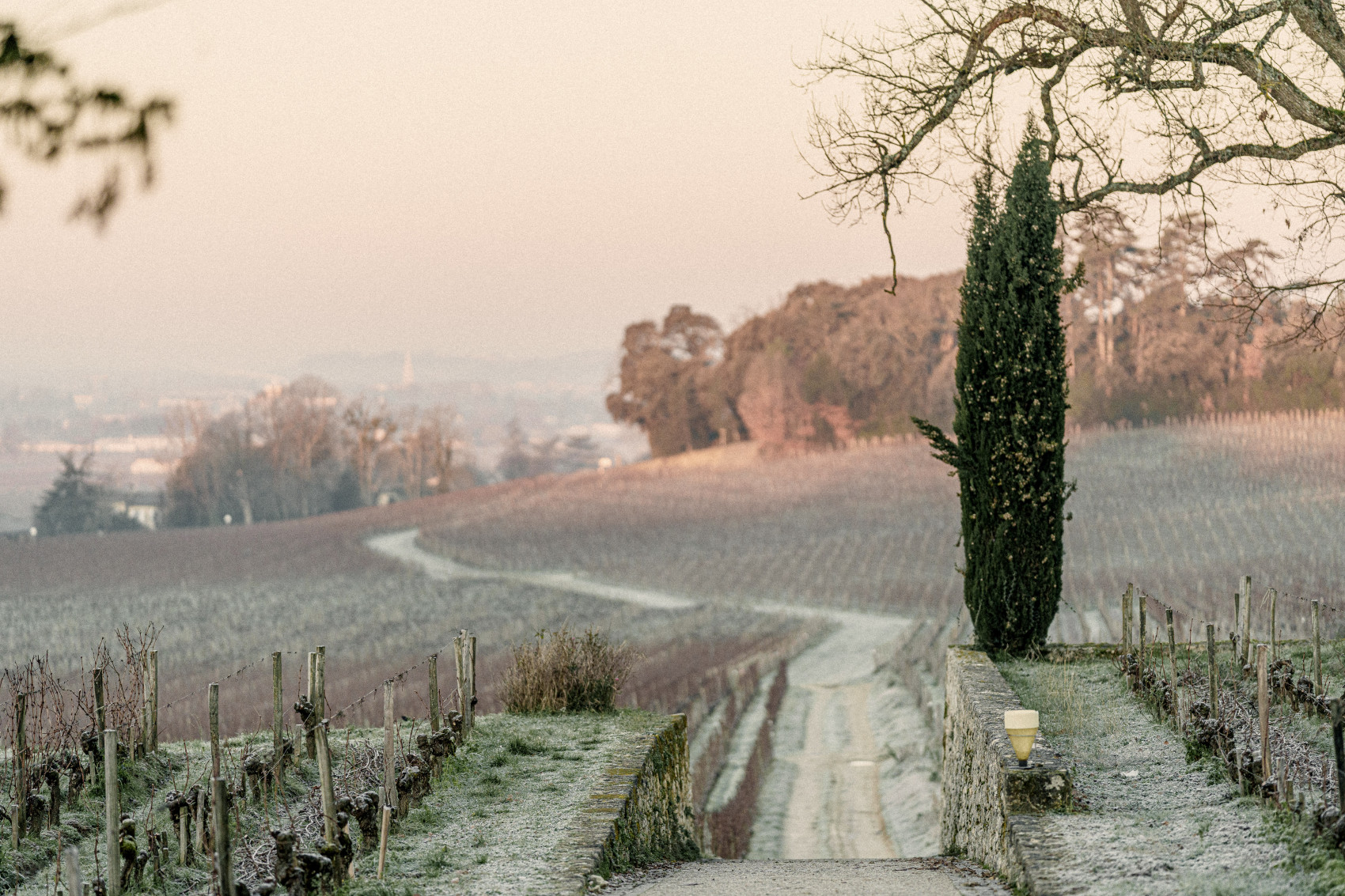
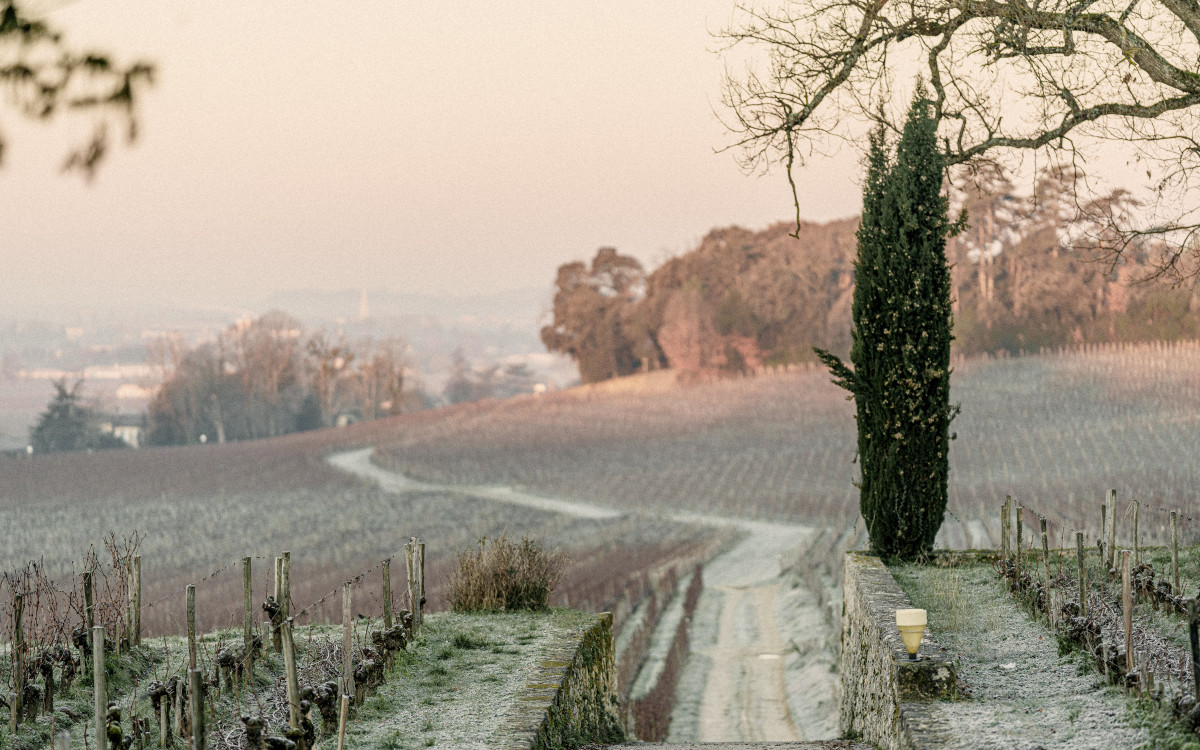
So we asked ourselves another question: what do people look at when they arrive at Beauséjour? The answer was obvious: this natural amphitheater overlooking Fronsac and Libourne, this open view, this light.
That’s where the idea came from: to bring the landscape inside, as if there were no walls.
Arnaud Boulain, with Christopher Poulain for the cellar design, did an extraordinary and precise job.
Even today, more than a year later, there isn’t a single time I enter the cellar without pausing for a moment. The light changes throughout the day, revealing different facets in the morning and in the evening. The landscape is reflected on the vats.
It is a unique, authentic place, a true jewel box, exactly as we had envisioned.
Does aging in the quarries also contribute to this sense of magic?
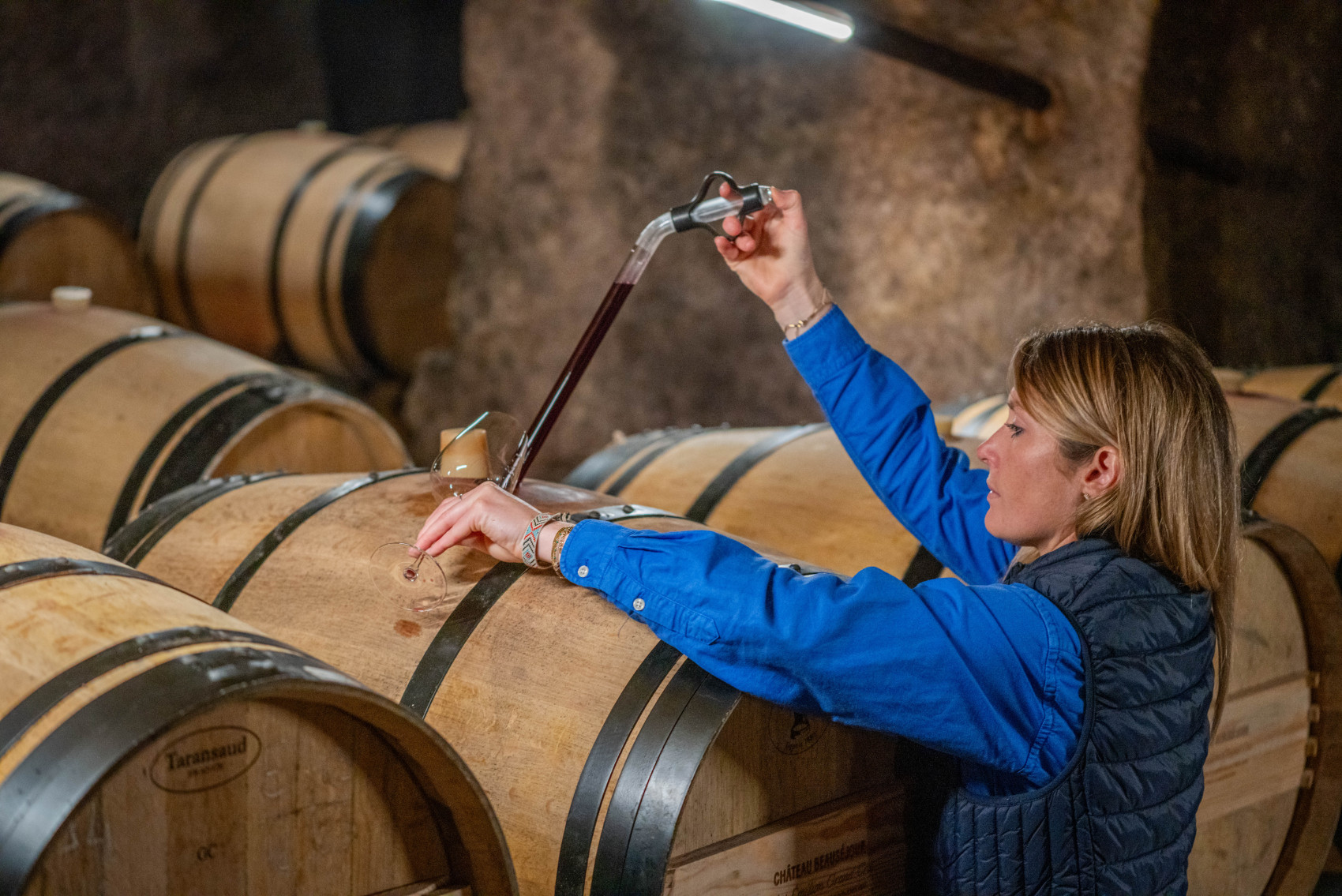
Absolutely. Having worked in climate-controlled, humidified cellars, I can truly measure the difference. Here, everything is natural: no air conditioning, no dry air, no humidifiers. The quarries offer ideal and constant conditions.
We experience very little loss, and therefore very little topping up is needed. And I am convinced this plays a role in the aromatic profile, those forest-floor notes found in older vintages of Beauséjour.
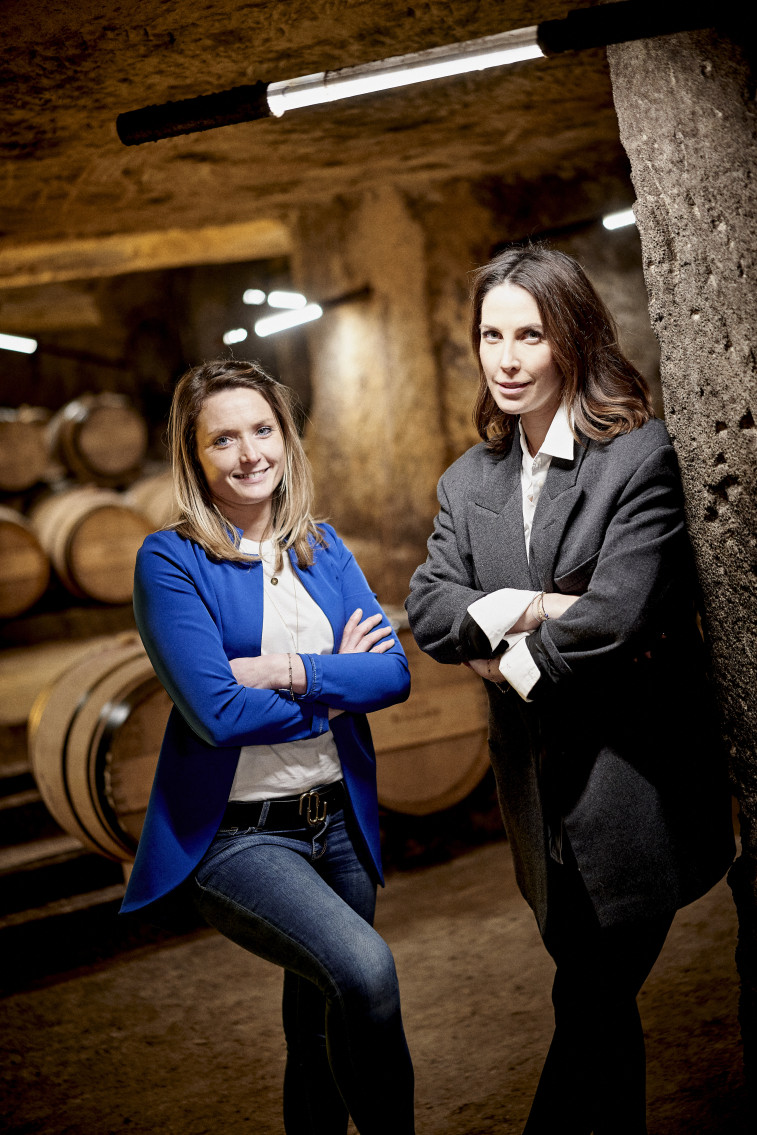
You and Prisca Courtin form a rather rare female duo at the head of a historic estate. What is your mindset?
It’s quite atypical and honestly, wonderful.
We each have our role. I am very involved in daily management, technical and commercial aspects. Prisca brings a strategic vision for the medium and long term.
I learn enormously alongside her. She helps me project forward: where do we want to be in ten years? What does that imply financially and structurally?
We are highly complementary.
We are almost the same age, from the same generation, and we speak the same language. There isn’t the generational gap that can sometimes exist between leaders. Everything flows naturally, even though our backgrounds are different.
What is your vision for the estate?
Ultimately, we would like to position Beauséjour as an iconic wine.
Not just as one of Bordeaux’s great wines, but as a wine that transcends its appellation.
In the spirit of Romanée-Conti, Masseto or Harlan Estate. Wines one dreams of tasting at least once in a lifetime. That is the ambition.
When did you know that your place was here?
I always had a connection to Beauséjour, but from afar. When my father mentioned the idea of me taking over the management, I felt torn. I was afraid of being trapped in a system, surrounded by people with more experience, without real freedom of expression.
Things accelerated despite myself. I never imagined being at the head of Beauséjour at 30.
The true revelation came at the beginning of 2021, when I realized we might lose the estate. I had a deep conviction that this terroir was unique and that as a technician, I would never find such freedom of expression elsewhere.
Meeting Prisca was decisive. Everything happened naturally. Her perspective, her respect for the place, her family… I understood that if I were to continue, it would be with them.
What beliefs did you have to dismantle in order to lead the estate so freely today?
The beginnings were not easy. Being partnered with someone who does not come from the wine world at all, nor even from Bordeaux, is actually an immense opportunity. It breaks many codes I had internalized almost unconsciously.
In Bordeaux, there is still a form of rigidity: what should be said, not said, done, not done. I believe things need to evolve without overturning everything. One must keep a foot in tradition, while opening the field of possibilities.
This applies to wine styles, but also to how estates open themselves to the public, and how they relate to people. Creating the impression that everything is inaccessible eventually becomes tiresome for wines as much as for places.
This deconstruction happened while keeping a solid foundation. But having someone by my side who fully supports me, who trusts the projects I lead, is invaluable.
I am convinced that had I taken over alone, with the weight of 170 years of family tradition behind me, I would not have been able to change things as I am doing today and as I truly wish to.
Are there things you categorically refuse to sacrifice, regardless of constraints?
Yes, very clearly: production.
I am currently in a budget phase, and there are areas where adjustments can be made: hospitality, travel, for example. But reducing resources allocated to production, on 6.8 hectares, is simply not an option for me.
Trying to save money in the short term always ends up costing more later. I was taught that early on, and I firmly believe it. Quality is built there. It is non-negotiable.
In this production process, what place does intuition have in your daily work?
A huge one. Of course, we rely on analyses and data, especially during harvest. But there are moments when you simply feel that now is the right time, without being able to rationally explain it.
I would say intuition accounts for about 70% of my decisions. That requires self-confidence, but also the ability to acknowledge mistakes. When you are wrong, you must not fall into denial.
On an estate like this, with limited volumes, there is little room for error. So certain decisions are always supported by advice and dialogue. But intuition remains central.
How do you cultivate that intuition today?
Through observation and patience.
Over time, I have become less quick to respond. When an idea starts to take shape in my mind, I take the time to understand why.
I also discuss things a lot with other people. We work with Axel Marchal and Julien Viaud, and daily with Nicolas, who is with me on the estate. We often say to each other: “Intuitively, I think we should do this. What do you think?” And very often, we are in agreement.
I believe one must accept the possibility of being wrong. True self-confidence is not believing you are always right, but knowing how to question yourself.
When you think about your profession, which emotion comes back most often?
Pride.
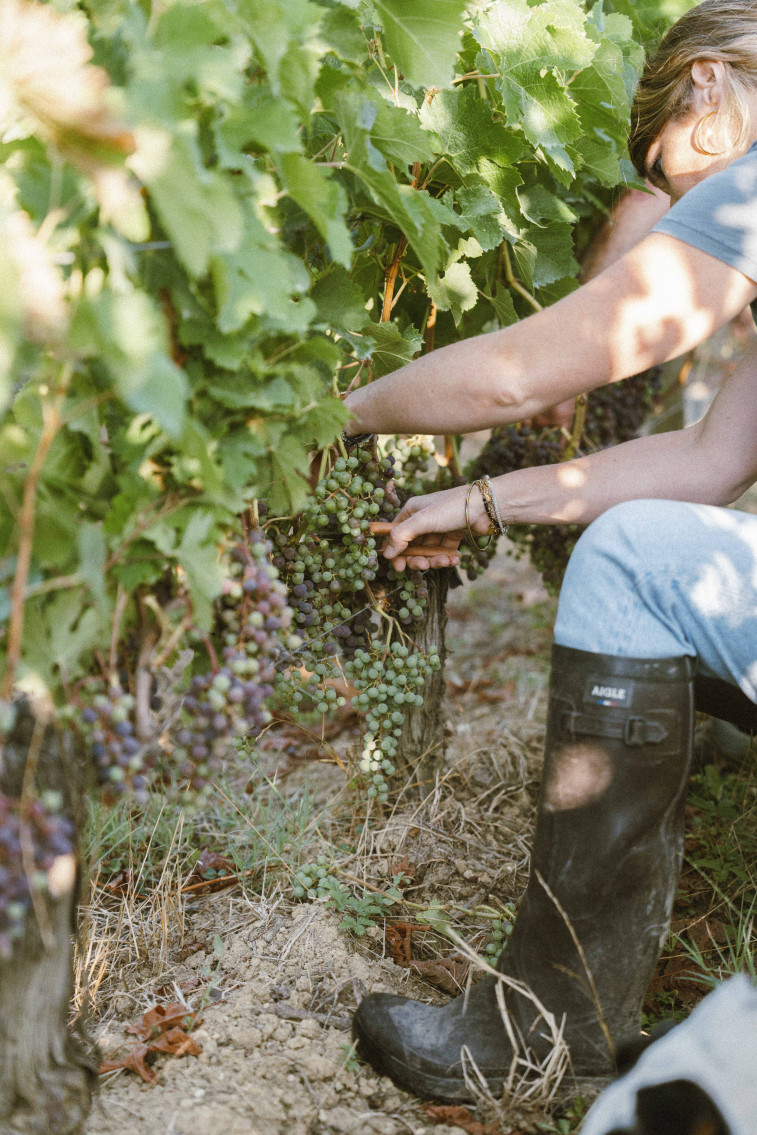
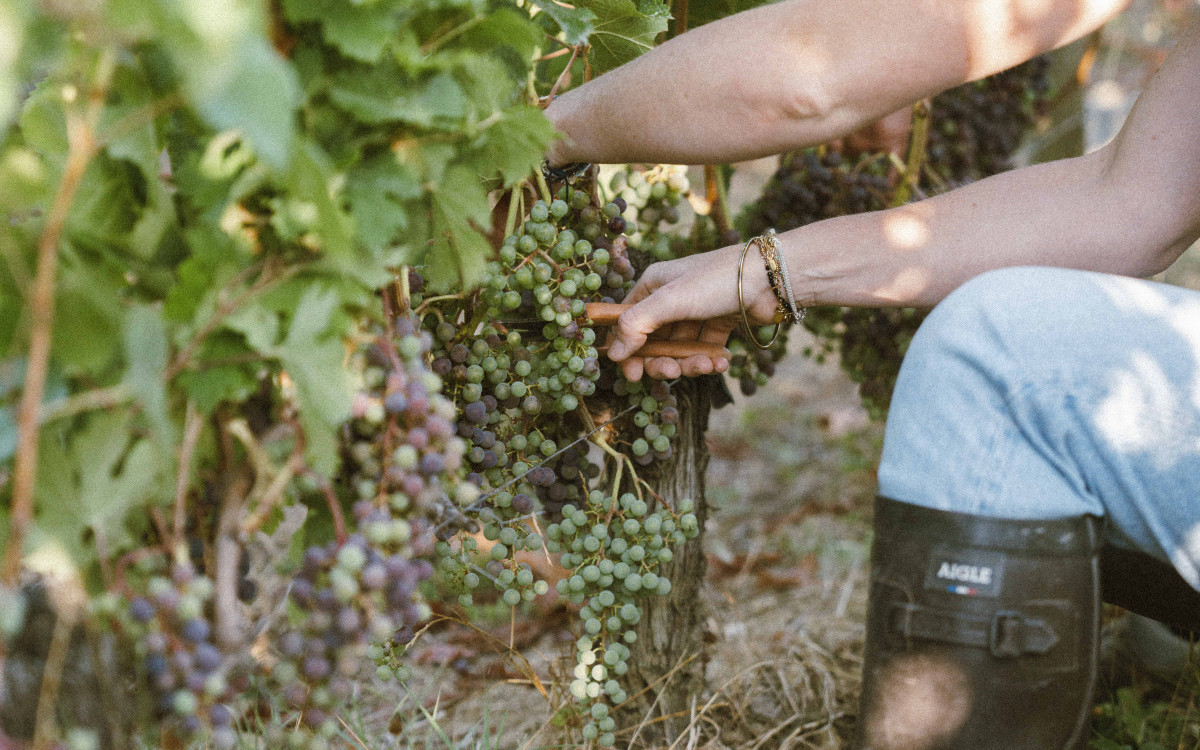
It is a magnificent profession. When you see, after pruning, the first buds appear and realize that everything begins there. It’s quite mind-blowing.
Creating something, vintage after vintage, never exactly reproducing the same thing, is exceptional. The truths of one vintage are never those of the next.
There is also a form of pride in the eyes of others. When you talk about wine with people outside the industry, there is real fascination. We are sometimes too immersed to see it, but this profession still inspires dreams.
Where do you think this fascination with wine comes from?
There is, of course, the vocabulary. I experienced this during tasting classes, some descriptions are almost unreal. But above all, there is the difficulty of access. Smelling a wine and putting words to it is not innate. It requires a lot of training.
We were trained to recognize aromas and structure tastings. Naturally, it is easier for us. People are fascinated by that ease.
But the greatest tasting moments, even for professionals, are those when you connect with an emotion. When you taste blind, when all the planets align, and you are literally transported.
When you craft a wine, what is the guiding question for each vintage?
Always the same: how to best express the place.
It guides decisions around ripeness, extraction and aging. I want to preserve freshness, avoid over-extraction, maintain elegance while keeping power.
Even for aging, there is no fixed rule. I am often asked about the percentage of new oak, but it entirely depends on the vintage.
Sometimes 40% is enough. Other years, the wine can support more. The common thread is always the expression of the place.
If your wine had to speak of an emotion rather than a terroir, which would it be?
Serenity. I am thinking particularly of the 2023 vintage. 2022 is often discussed, rightly so, but I am convinced that in 10, 15 or 20 years, 2023 will be recognized as a great vintage, with all the components in balance.
Do you have a personal memory associated with that emotion?
Yes… and it’s very personal… the emotion surprises me. (Pause)
In 2016, both my grandparents were suffering from Alzheimer’s disease. My grandfather passed away in 2015, my grandmother in 2017.
One day in March 2016, I went for a walk with her, from Libourne to Beauséjour. At that time, she no longer remembered my name, but when we reached the middle road in SaintÉmilion, she said: “Turn left.” She remembered the exact way to the château.
We spent time on the estate. She did what she always did: tending the rose bushes. That memory marked me deeply. Some things remain, no matter what.
If you could speak to the Joséphine of ten years ago, what would you tell her?
“You will make it.”
I wish someone had told me that. It would have meant a lot.
What is the question you are never asked, but would like to hear more often?
A genuine “How are you?”. Not the polite version.
A real one, sincere, with true listening behind it. It always does good.
As a female leader, how do you experience this multiplicity of roles?
Personally, I experience it very well. How other people see it can be more burdensome.
When I took over Beauséjour at 30, many people around me were entering a different life phase (marriage, children). I was moving at full speed, entirely focused on the takeover, with an almost animal energy, like a lioness.
People often told me I should slow down. But I was fine. I was doing what I loved. One does not exclude the other. A woman can be fulfilled in many different ways.
You mentioned the book Kilomètre Zéro. In what ways did it make you reflect?
Honestly, it made me reflect on both my personal and professional life. It was recommended to me; I read it, then went back to certain passages. There are moments when everything becomes clear, as if stepping out of a fog. Some sentences still resonate so strongly that I already know I will reread it.
It also highlights our relationship with time. You realize how much of life is spent running until you wonder whether you are sometimes missing what truly matters.
In my profession, this question is central. It is a consuming passion, with a very fine line between professional and personal life. You accept one more commitment, sometimes at the expense of personal time, almost without realizing it. This book made me aware of that, without ever being guilt-inducing.
It also touched me deeply on a personal level. I didn’t read it in one go, I put it down, picked it up again, let it sink in. By the end, it moved me to tears. I am convinced that books like this cannot be read at just any moment in life. Depending on what you are going through, you receive its messages differently, and that is precisely what makes it so true.
You mentioned Le Dîner de Cons as a favorite film. Do you have a guilty pleasure that would make you a perfect guest at a “dinner of fools”?
(Laughs) I love that film because we are all someone’s fool! At one point, I used to collect corks from every bottle I drank… I stopped. It took up too much space, and collected far too much dust!
Stream of consciousness
A book
Kilomètre Zéro, by Maud Ankaoua. I read it this summer and it deeply resonated with me.
A piece of music
I Want to Break Free, by Queen. A song that speaks to me daily.
A film
Le Dîner de cons. I adore it. I almost know the lines by heart. It makes me laugh every time, and Jacques Villeret is absolutely brilliant. After all, we are always someone’s “fool”.
A dish
Rabbit in white sauce with morel mushrooms. I love cooking generous dishes, especially for large gatherings.
A scent
Cotton flower. I like subtle, fresh fragrances. I hesitated with vine flower. Which I love just as much.
A place to recharge
Lézignan-Corbières, where my maternal family home is. There are also vineyards there, but with a different approach, very close to what I defend and share.
An activity to recharge the batteries
Surfing. It is the only sport that allows me to think of nothing else and truly clear my mind.
A person you would dream of dining with
I don’t have an absolute celebrity fantasy. But if she were still alive, I would have loved to meet Colette. I admire her style and the freedom she embodied for her time.
Your most recent tasting highlight
Château Léoville Las Cases 1990. An incredible bottle, charged with emotion, inseparable from the people I shared it with and the place where it was tasted.
Interview by Marie-Pierre Dardouillet
Photos from the property, Château Beauséjour